


Use of pitaya (Hylocereus spp.) peel in jam making: Effects of peel/sugar ratio and high methoxyl pectin level on textural quality and overall acceptability of the product
- Department of Food Technology, Ho Chi Minh City University of Technology (HCMUT), Vietnam National University, Ho Chi Minh City (VNU-HCM)
Abstract
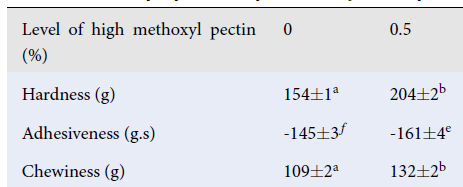
Pitaya is a tropical fruit with high nutritional value and is industrially used to make different food products. This fruit has been widely cultivated in different Asian countries. Pitaya peel is usually discarded during fruit processing as a by-product even though it is rich in different nutrients. In this study, pitaya (Hylocereus polyzhizus and Hylocereu undatus) peel is used as a material to develop a new value-added product. The protein content of red flesh pitaya peel was 1.3 times higher than that of white flesh pitaya peel. The carbohydrate and total dietary fiber contents of red flesh pitaya peel were lower than those of white flesh pitaya peel. The pectin content of red flesh fruit peel was lower than that of white flesh fruit peel. The betacyanin content of red flesh pitaya peel was 1.6 times higher than that of white flesh pitaya peel. Red flesh pitaya peel (Hylocereus polyzhizus) was used for the jam experiment due to high antioxidant content and activity. Effects of peel/sugar ratio and high methoxyl pectin level were evaluated for textural properties and overall acceptability. The peel/sugar ratio was varied 30/70, 40/60, 50/50, 60/40, 70/30 (w/w) and the level of high methoxyl pectin was 0 (control), 0.5, 1.0, 1.5, 2.0 and 2.5% of the puree weight. When the peel/sugar ratio increased from 30/70 to 70/30 (w/w), the jam hardness increased by 635% and the overall acceptability of jam increased from 30/70 to 50/50 (w/w). When the high methoxyl pectin level increased from 0 to 2.5%, the jam hardness increased by 120% and the overall acceptability of jam increased from 0 to 1.5%. The peel/sugar ratio 50/50 w/w and 1.5% high methoxyl pectin were appropriate due to the improvement in hardness and adhesiveness.