


Use of wheat flour and sugarcane bagasse in the production of fiber-rich biscuit: Effects of sugarcane bagasse ratio on the product quality
- Department of Food Technology, Ho Chi Minh City University of Technology (HCMUT), Vietnam National University Ho Chi Minh City (VNU-HCM), Vietnam
Abstract
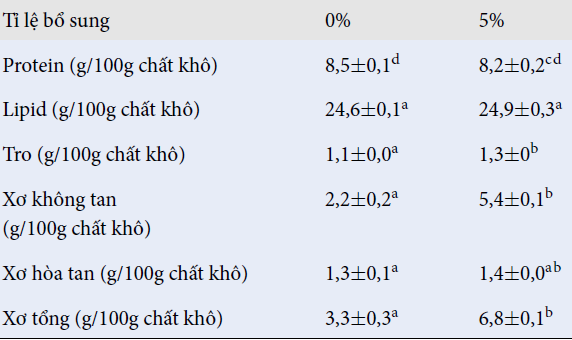
Nowadays, sugarcane is used as main material to manufacture crystal sucrose and packaged sugarcane juice. The sucrose production generates sugarcane bagasse with sugarcane peel while the sugarcane juice production releases sugarcane bagasse without its peel. There have been many reports on the use of sugarcane bagasse with peel to produce various value-added products. Nevertheless, the application of sugarcane bagasse without peel to food processing has not been widely considered. In this study, the peeled bagasse from the sugarcane juice manufacturing process was employed as a dietary fiber source. The peeled bagasse was dried, ground, sifted and added to the biscuit formulation; the supplementation ratio was 0 (control), 5, 10, 15 and 20% (w/w) of the blend of wheat flour and sugarcane bagasse. Increase in sugarcane bagasse ratio reduced the protein content of the biscuit but improved its soluble and insoluble dietary fiber and ash contents. Use of sugarcane bagasse did not dramatically alter diameter and thickness of the biscuit but significantly increased its hardness and brightness. The biscuit samples with 5, 10 and 15% sugarcane bagasse powder were considered as high-fiber food products and had similar overall acceptability to the control sample. The peeled sugarcane bagasse powder can be a potential source of dietary fiber in the production of fiber-rich biscuits.