


Effect of mixing phenol/rice husk to the ability form phenolic resin
- Department of Silicate Materials, Faculty of Materials Technology, Ho Chi Minh City University of Technology (HCMUT), 268 Ly Thuong Kiet Street, District 10, Ho Chi Minh City, Viet Nam
- Viet Nam National University Ho Chi Minh City, Linh Trung Ward, Thu Duc City, Ho Chi Minh City, Viet Nam
Abstract
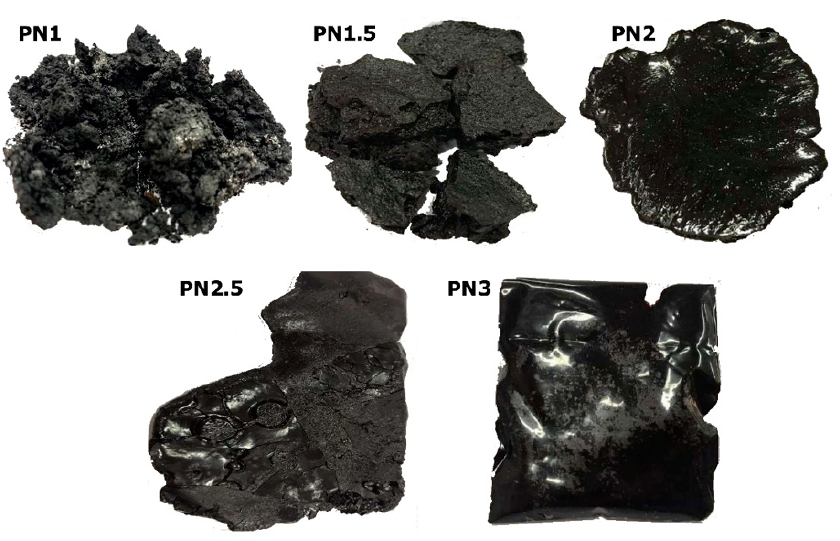
Rice is an essential plant that brings high economic value to Viet Nam. In addition to the main product, rice agriculture produces a significant amount of by-products each year. This waste is known as rice husk. The amount of rice husks discharged each year is estimated to be over 9 million tons. They are usually processed by burning. Another amount is released into the environment. These treatments are potentially harmful to the environment and bring low economic efficiency. Therefore, many ways of treatment were suggested and considered. In this study, rice husk was used to synthesize phenolic resin. The rice husk was ground to powder less than 500μm. The husk powder, phenol, and sulfuric acid were mixed with different ratios. The mixtures were heated to 150℃ and soaked for 180 minutes. The efficiency of the reaction was evaluated through the remaining amount of rice husk. The C13 Nuclear Magnetic Resonance Spectroscopy (C13 - NMR) and Fourier Transform Infrared Spectroscopy (FTIR) were used to determine the structure and functional groups of the resin. A number average molecular weight (Mn) and a weight average molecular weight (Mw) were defined by using Gel Permeation Chromatography (GPC). The results show that phenolic resin was synthesized successfully from rice husk. The optimal ratio between phenol and rice husk powder is 2:1 with a 5% sulfuric acid additive. The efficiency of the reaction is determined at 90.34%. The results of structure prediction by FTIR and C13 - NMR show that the molecular formula of the formed resin is (CH2 - C6H4 - OH)n. It has the weight average molecular weight value of 11709 and the number average molecular weight of 7782. The synthesized phenolic resin can be applied as a binder or as one kind of heat-resistant plastic.