


Study on the effect V-Grooving on spring back phenomenon of V-bending process
- Faculty of Mechanical Engineering, Ho Chi Minh City University of Technology (HCMUT), 268 Ly Tuong Kiet Street, Dien Hong Ward, Ho Chi Minh City, Viet Nam
- Viet Nam National University Ho Chi Minh City, Linh Xuan Ward, Ho Chi Minh City, Viet Nam
- Saigon An Phu Co., Ltd
Abstract
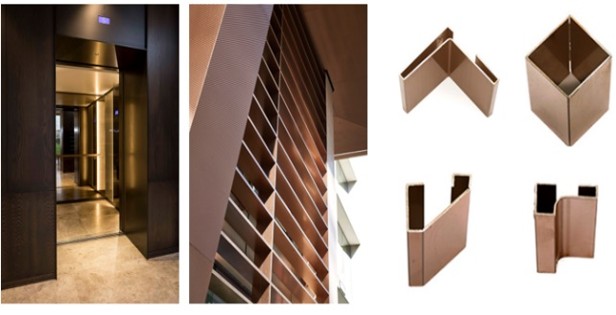
The combination of V-bending and V-grooving has proven to be highly effective in forming aesthetically refined sheet metal products, especially in high-end interior applications. This technique enables the creation of sharp, clean bend angles and enhances the geometric accuracy of final products, delivering a modern and seamless appearance. However, one of the key challenges in the V-bending process is the spring back phenomenon, which significantly affects the accuracy of the final bending angle. This paper presents an experimental study on the influence of three primary technological parameters—groove depth, bending height, and end hold time—on the spring back behavior in the V-bending process with pre-cut V-grooves. A Taguchi L9 orthogonal array is employed to efficiently design the experiments, minimizing the number of trials while ensuring statistical reliability. The Signal-to-Noise (S/N) ratio is used as the evaluation criterion, with the quality objective of “smaller is better” applied to minimize spring back. The results indicate that bending height has the most significant effect on reducing spring back, followed by groove depth, whereas end hold time shows negligible influence and may be treated as a noise factor in further optimization. The optimal set of process parameters identified from the study includes a bending height of 0.6 mm, groove depth of 0.3 mm, and end hold time of 3 seconds. These findings provide valuable insights for improving the forming accuracy of V-bent sheet metal parts, especially in applications requiring precise and visually appealing features.The study contributes to the scientific basis for optimizing metal bending processes and supports the development of more efficient manufacturing techniques for high-quality decorative metal components.