


Research and design two-axis profile scanning control system supporting fiber laser welding technology
- Control, Automation in Production and Improvement of Ttechnology Institute, 89B Ly Nam De Street, Hoan Kiem District, Hanoi City, Vietnam
- Faculty of Mechanical Engineering, Ho Chi Minh City University of Technology (HCMUT), Vietnam
- Vietnam National University Ho Chi Minh City, Ho Chi Minh City, Vietnam
Abstract
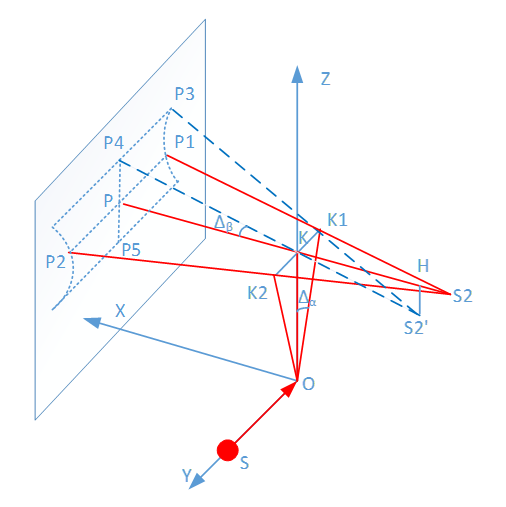
This research paper presents a comprehensive investigation into the design and development of a cutting-edge two-axis profile scanning control system tailored explicitly for fiber laser welding technology. The system incorporates two reflecting galvanometer mirrors, which play a pivotal role in achieving precise and intricate laser profiles, effectively addressing the inherent challenges of controlling heat application in welding processes. With the mathematical model of the control system carefully formulated, encompassing forward and inverse kinematic equations that govern the rotational angles of the mirrors, these equations establish the fundamental relationship between the movements of the mirrors and the resulting laser profiles, facilitating a deeper understanding of the control mechanisms. To ensure optimal performance, an advanced control algorithm is proposed to efficiently manage the mirrors' motions, carefully considering sampling time and operational limitations, thus providing a comprehensive and effective approach to control the system. Extensive MATLAB simulations are conducted to evaluate the effectiveness and accuracy of the algorithm, providing tangible evidence of its ability to achieve precise and customizable laser profiles. The two-axis profile scanning control system demonstrates significant advantages over conventional welding methods, offering unparalleled flexibility and control over welding geometries. This versatility enables the welding of delicate materials and complex components with exceptional accuracy and minimal heat loss, thereby expanding the range of applications in various industries, including automotive, electronics, and medical devices. Beyond the realm of welding, the developed control system exhibits immense potential for broader applications in material processing, additive manufacturing, and high-precision fabrication processes, further solidifying its position as a transformative tool in modern manufacturing and automation. In conclusion, this research paper represents a critical contribution to the advancement of fiber laser welding technology by introducing a cutting-edge two-axis profile scanning control system. The system's ability to generate precise and intricate laser profiles has the potential to revolutionize metal joining processes, empowering manufacturers with greater flexibility and control over weld geometries, and its broader applicability in high-precision applications holds promise for a wide range of industries, marking a significant step towards the realization of advanced and efficient manufacturing practices.