

Study on the stable dynamics of AUV using computational fluid dynamics (CFD)
- Faculty of Mechanical Engineering, Ho Chi Minh City University of Technology (HCMUT), 268 Ly Thuong Kiet Street, District 10, Ho Chi Minh City, Vietnam
- Vietnam National University HCMC, Linh Trung Ward, Thu Duc City, Ho Chi Minh City, Vietnam
Abstract
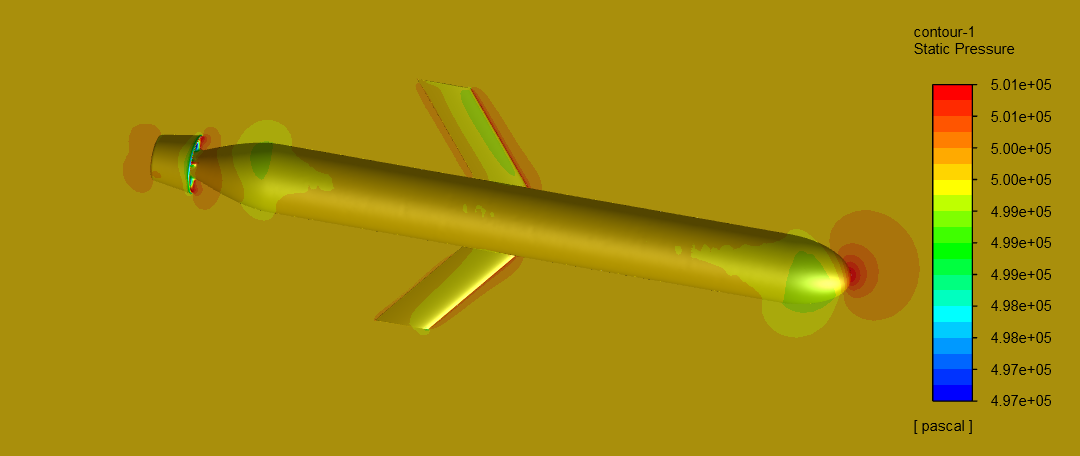
Understanding the hydrodynamic behavior of Autonomous Underwater Vehicles (AUVs) is essential for evaluating their stability and control. In this study, a computational approach is employed to investigate the stable motion characteristics of an AUV operating at a design speed of 1.5 m/s. The simulation setup replicates procedures similar to those used in the towing tank and rotating arm tests, as standardized by the International Towing Tank Conference (ITTC). The goal is to determine the hydrodynamic derivatives associated with the AUV’s motion in both the horizontal and vertical planes. By applying Computational Fluid Dynamics (CFD), the study calculates reaction forces and moments acting on the AUV's body under controlled flow conditions. These values are then used to identify the linear coefficients in the vehicle's equations of motion. Stability analysis is performed using the Routh-Hurwitz criterion to assess straight-line stability at the selected operating speed. The CFD simulations are performed using ANSYS FLUENT, a widely used and robust commercial software for fluid dynamics problems. The fluid domain is modeled under steady conditions, and the turbulence effects are accounted for using the Reynolds-Averaged Navier–Stokes (RANS) model. Near-wall effects, which are critical for accurately predicting pressure distributions and shear forces, are handled using the standard k–ε turbulence model. This combination offers a practical compromise between computational time and accuracy, especially when assessing pressure and shear distributions around the hull. The study demonstrates that CFD can be effectively used to evaluate dynamic stability in the early stages of AUV design. This method reduces the need for costly physical testing and provides designers with critical insights into hydrodynamic behavior, which is beneficial for optimizing control systems and improving vehicle performance in underwater missions.