


Voice conversion for natural-Sounding speech generation on low-Resource languages: A case study of bahnaric
- Faculty of Computer Science and Engineering, Ho Chi Minh City University of Technology (HCMUT), Ho Chi Minh City, Vietnam Vietnam National University Ho Chi Minh City, Ho Chi Minh City, Vietnam
- Faculty of Computer Science and Engineering, Ho Chi Minh City University of Technology (HCMUT), Vietnam
- Vietnam National University Ho Chi Minh City (VNU-HCM), Vietnam
Abstract
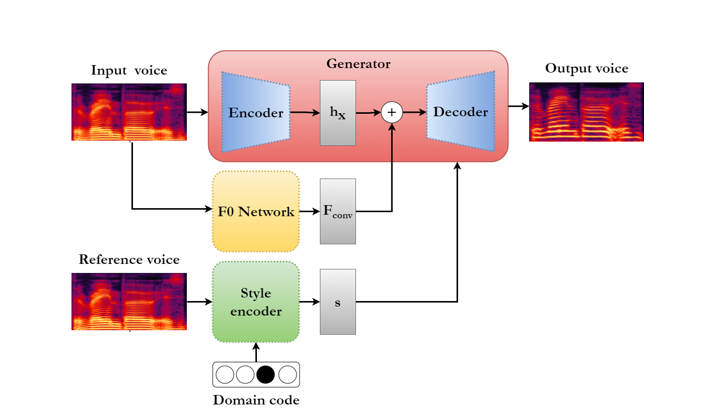
Bahnar is an ethnic minority group in Vietnam, prioritized by the government for the preservation of their cultural heritage, traditions, and language. In the current era of AI technology, there is substantial potential in synthesizing Bahnar voices to support these preservation endeavors. While voice conversion technology has made strides in enhancing the quality and naturalness of synthesized speech, its focus has predominantly been on widely spoken languages. Consequently, low-resource languages like the Bahnaric language family encounter numerous disadvantages in voice synthesis. This study addresses the formidable challenge of synthesizing natural-sounding speech in low-resource languages by exploring the application of voice conversion techniques to the Bahnaric language. We introduce the BN-TTS-VC system, a pioneering approach that integrates a text-to-speech system based on Grad-TTS with voice conversion techniques derived from StarGANv2-VC, both tailored specifically for the nuances of the Bahnaric language. Grad-TTS allows the system to articulate Bahnaric words without vocabulary limitations, while StarGANv2-VC enhances the naturalness of synthesized speech, particularly in the context of low-resource languages like Bahnaric. Moreover, we introduce the Bahnaric-fine-tuned HiFi-GAN model to further enhance voice quality with native accents, ensuring a more authentic representation of Bahnaric speech. To assess the effectiveness of our approach, we conducted experiments based on human evaluations from volunteers. The preliminary results are promising, indicating the potential of our methodology in synthesizing natural-sounding Bahnaric speech. Through this research, we aim to make significant contributions to the ongoing efforts to preserve and promote the linguistic and cultural heritage of the Bahnar ethnic minority group. By leveraging the power of AI technology, we aspire to bridge the gap in speech synthesis for low-resource languages and facilitate the preservation of their invaluable cultural heritage.