


Current status of exposure to total suspended particles (TSP), total crom, and chromium (VI) in cement plant in South of Vietnam
Abstract
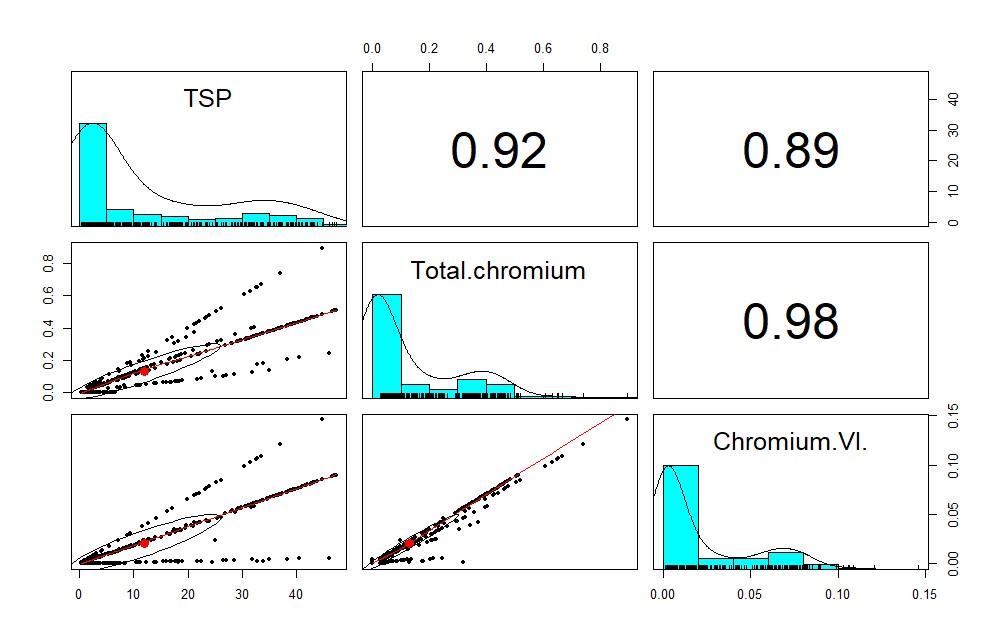
Total suspended particulate (TSP), total chromium (T-Cr), and chromium Ⅵ (Cr6+) at three cement factories in the southern region of Vietnam were determined in this study. A 488 samples were taken independently from work locations and personal areas in dry and rainy seasons. Evaluate the results obtained based on the average value and standard error of samples in the work area. The concentration of T-Cr and Cr6+ are not affected by weather conditions, but TSP differs between the two seasons. There are 117 samples (accounting for 48%) in the rainy season and 124 samples (accounting for 51%) in the dry season of [TSP] exceeding the limit of QCVN 02:2019/BYT (National Technical Regulation on Dust - Permissible Exposure Limit Value of Dust at the Workplace, ≤ 4 mg.m-3), mainly concentrated in raw materials, clinker, and cement areas. There are 13 samples of [T-Cr] exceeding the limit of QCVN 03:2019/BYT (National Technical Regulation on Permissible Exposure Limit Value of 50 chemicals at the Workplace, ≤ 0.5 mg.m-3), of which 84.6% are in the dry season. There are 105 samples of [Cr6+] exceeding the QCVN 03:2019/BYT (National Technical Regulation on Permissible Exposure Limit Value of 50 chemicals at the Workplace, ≤ 0.05 mg.m-3), accounting for 21.5% of the total number of samples collected and 82.8% of the total number of samples exceeding the limit in the cement area. Based on the analysis of variance (ANOVA), there is a positive correlation between TSP concentration and the concentrations of T-Cr and Cr6+ with coefficients of 0.92 and 0.89, respectively. Workers exposed to TSP and Cr6+ in high dust increase the risk of occupational diseases. Managers need to monitor chromium and metabolite concentrations in biological samples to have appropriate interventions.