

Deproteinization and demineralization of shrimp head using yeasts isolated from Nemchua
- Department of Food Technology, Ho Chi Minh City University of Technology, Vietnam
- Vietnam National University Ho Chi Minh City, Vietnam
Abstract
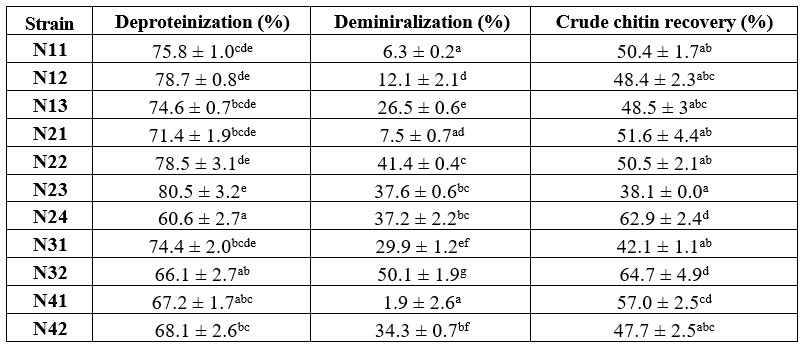
In recent years, the utilization of seafood processing by-products has attracted considerable attention due to their potential as a source of natural biopolymers. Shrimp processing by-products, particularly head material, are recognized as a rich source of chitin - a valuable natural polysaccharide widely used in various industrial and biomedical applications. This study investigated the isolation of indigenous yeasts from Nemchua, a traditional Vietnamese fermented meat product, and evaluated their capacity for chitin recovery from whiteleg shrimp (Litopenaeus vannamei) heads. Eleven yeast strains were successfully isolated and purified from Nemchua samples. Their morphological characteristics and representative carbohydrates utilization profiles were also evaluated. Preliminary screening demonstrated that all isolates exhibited culturability on shrimp heads, indicating their potential to utilize shrimp processing waste as a nutrient source. Fermentation was proceeded under conditions of 5 days at an initial pH of 8.87, with an inoculum of 108 CFU/g, and fermentation efficiency was evaluated based on deproteinization, demineralization, and crude chitin recovery. The results showed that, all strains demonstrated deproteinization level exceeding 60%, with highest reaching 80.5% observed in the most potent strains. Demineralization levels varied significantly, ranging from 1.9 to 50.1%, while the pH of fermented shrimp culture declined slightly from 8.87 to 8.32-8.80. Crude chitin recovery was also determined in the range of 38.1-64.8%. Deproteinization showed a significant negative correlation with crude chitin recovery (r = -0.74, p < 0.001), while no clear relationship was observed between demineralization and pH changes, suggesting that mineral removal may be associated with protein removal during fermentation rather than acidification alone. Among the isolates, strains N22 and N23 showed the most potential for industrial application, exhibiting high levels of deproteinization, demineralization and performance in chitin recovery. These findings highlight the potential of using indigenous yeast fermentation as a sustainable and green approach for the valorization of shrimp processing by-products.