


Research to use vegetable oil to replace DOP to produce rubber products applied in water supply and drainage industry
- Faculty of Materials Technology, Ho Chi Minh City University of Technology, VNU-HCM
- Faculty of Chemical Engineering, Ho Chi Minh City University of Technology, VNU-HCM
Abstract
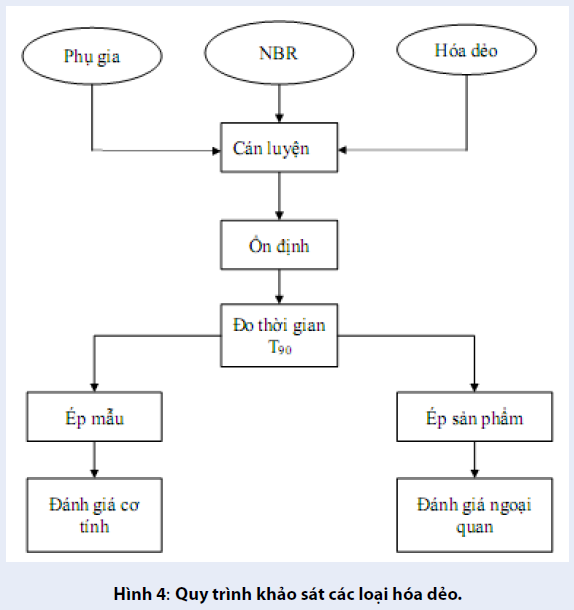
Nowadays di-2-ethylhexyl phthalate (DOP) plasticizer is commonly used for compounding in products made from rubber. However, there is an incresing concern about negative health effects (eg,. adversed sex hormone or breast cancer) upon exposure of phthalate plasticizers including DOP to human. In this research, epoxidized soybean oil (ESO) and cardanol (CDN) were evaluated as alternatives to traditional DOP at two different contents (20% and 25%). Rubber compounds were prepared on a two-roll mill and determined for optimum curing time (T90) by moving die rheometer at 150 ◦C. Tensile strength, tear strength, and thermal stability of rubber compounds were also measured. The results showed that rubber compounds formulated with ESO and CDN had shorter curing times of 4.25 and 5.58 minutes respectively than the compound with DOP (6.25 minutes). Especially, the curing time is further reduced for the compound with ESO at a higher content. The value of tensile strength is similar for all three compounds with 20% plasticizer content. The rubber compound with 25% ESO content has a tensile strength of 12.8 N/mm2 which is much higher than ones with DOP and CDN at the same content. Yet, compound with DOP showed a greater tear strength value of 52.94 N/mm2 while the tear strength is only improved for compound with ESO upon reducing content. A similar result is also obtained when comparing the effect of three plasticizers in abrasion resistance test. Based on the acquired mechanical properties, we can conclude that ESO can be a good candidate to replace traditional phthalate in rubber products; especially it can fulfill requirements of rubber o-rings in drainage pipe system.