
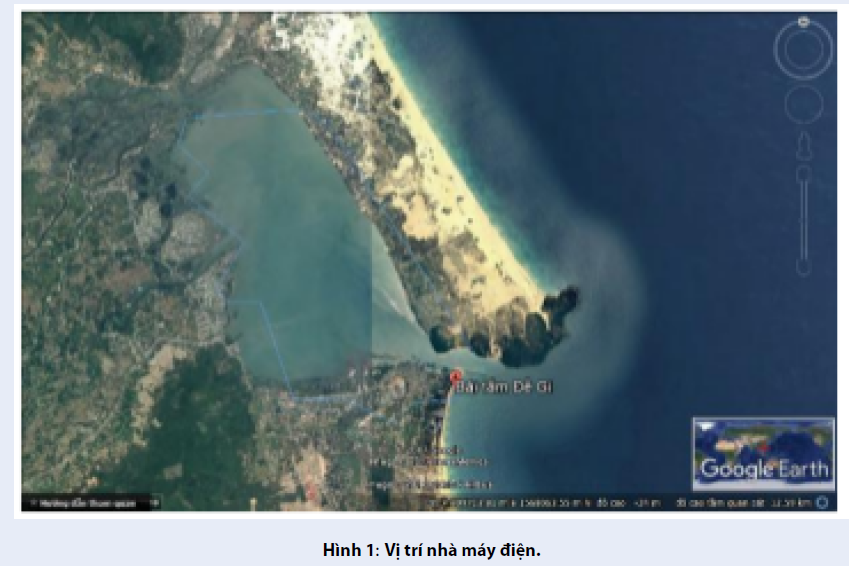


Temperature spreading simulation by using 3D model - thermal power plant in the coastal Degi, Binh Dinh
- Laboratory for Environmental Modelling, Faculty of Environment and Natural Resources, Ho Chi Minh City University of Technology, VNU-HCM
- Department of Applied Mathematics, Faculty of Applied Sciences, Ho Chi Minh City University of Technology,VNU-HCM
- Faculty of Faculty of Mechanical Engineering, Can Tho University of Technology
Abstract
Thermal energy accounts for more than 50% of the country's total power supply system and plays a particularly important role in the national power supply system. However, the process of cooling the turbine systems of plants and the discharge of used water after cooling are the reasons for the large impact on the aquatic environment and ecosystem. Therefore, it is necessary to calculate the distribution and dispersion of heat in coastal areas removed by thermal power plants. According to the project, the drain source was built near the cooling water intake, so it can affect the source of cooling water. The investor was also considering the construction of a dam to reduce the impact on the supply of cooling water. Both of these options should be considered and analyzed. Therefore, the research team applied a modeling approach to calculate and evaluate the effect of heat propagation in two scenarios. MIKE21, 3 FM instruments combined with meteorological - oceanographic data. The results showed that the source of discharge affected the inlet position in the station area, and during the construction of the dam, the degree of influence of the source of discharge on the source of cooling water intake of the Binh Dinh power plant was significantly reduced. Before starting the model, the calibration and verification steps are performed, which give satisfactory reliability.